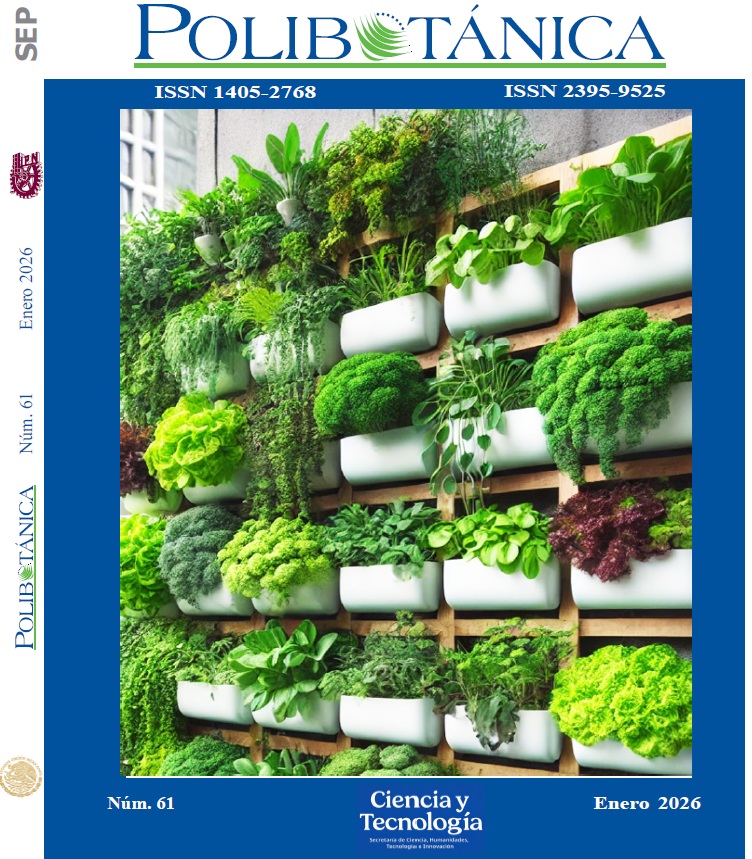
Vertical gardens as a contribution to household food security
March 5, 2026
Population growth, rural–urban migration, and climate change are increasing challenges related to food availability in Latin America. A recent study evaluated the productivity potential of vertical gardening systems as a solution for food production in limited spaces.
The research assessed two vertical production designs were evaluated in combination with three types of substrates: poultry manure, vermicompost, and forest litter/mulch and three edible species: Beta vulgaris, Spinacia oleracea L., and Brassica campestris L. The results showed that the structural design of the production system and the type of substrate significantly influence the yield of B. vulgaris, with a production of 329.6 kg/m³ achieved using design D2 in combination with poultry manure. For the species S. oleracea and B. campestris, the highest yields were obtained using vermicompost and poultry manure substrates, regardless of the structural production design, with yields of 163.7–193.4 kg/m³ and 120.0–143.8 kg/m³, respectively.
Both designs demonstrated high production potential, highlighting vertical systems as a promising strategy to strengthen food security among low-income families.